Reducing Mental Friction by 60% Through Micro-Journaling for Sixty
The Problem
Mental health apps have a 90% abandonment rate within the first week. Users feel overwhelmed by feature-rich interfaces and the pressure to write lengthy journal entries. Sarah, a busy professional, wants to reflect on her day but dreads opening her journal app because it feels like homework.
Key Insight
During testing, I noticed users spent 30 seconds deciding what to write about. Adding a 60-second timer removed that decision paralysis entirely. Constraints became the feature, not a limitation.
The Solution
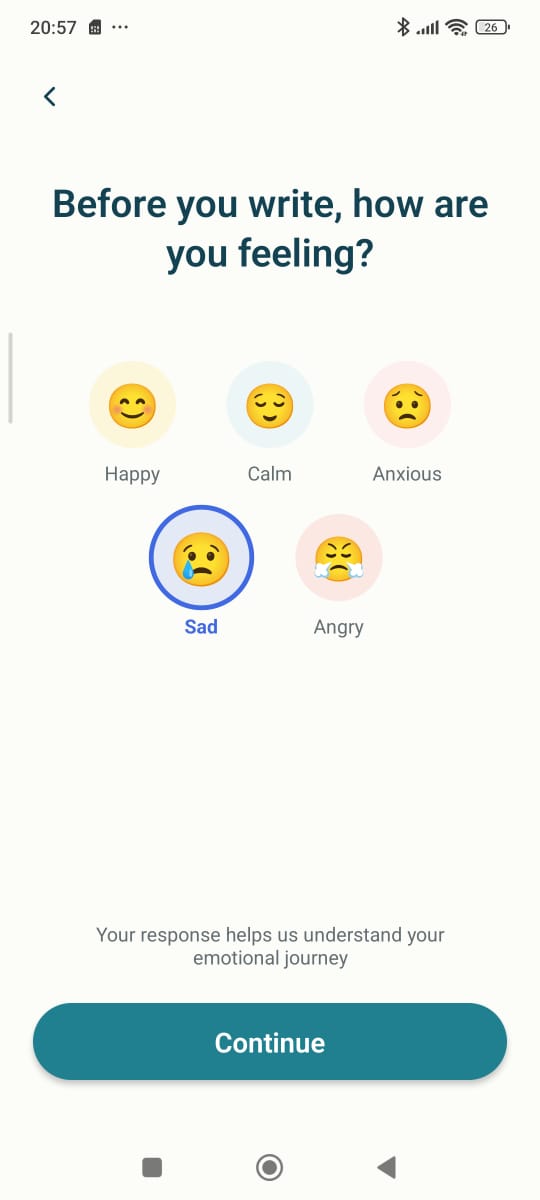
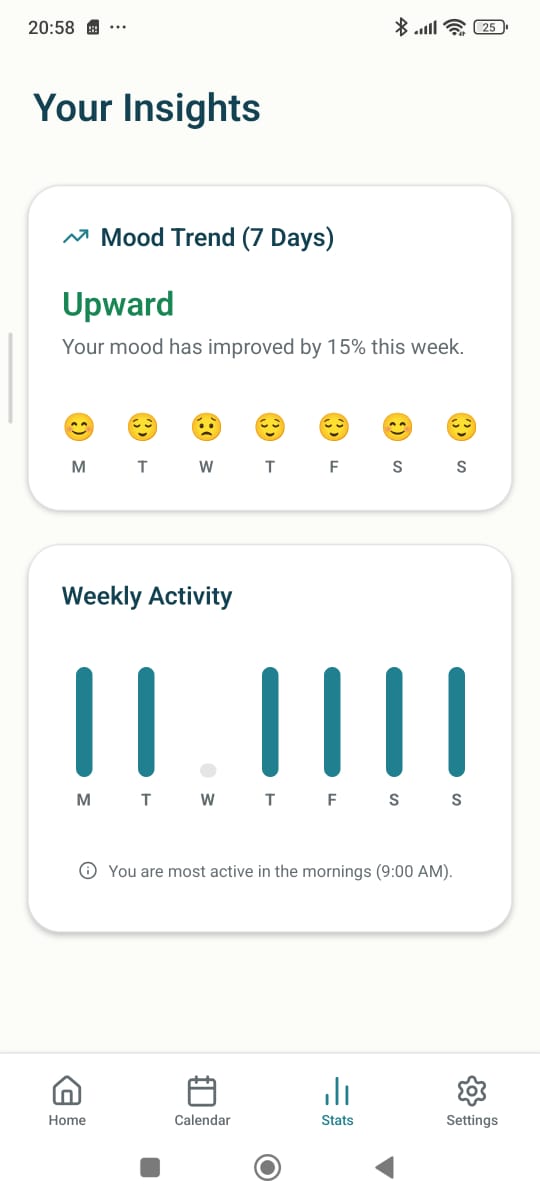
Sixty constrains journaling to exactly 60 seconds. No formatting, no prompts, no decisions—just open the app and write. The timer creates urgency that eliminates decision paralysis, turning reflection from a chore into a quick, guilt-free habit.
Process
Research
I used AI to cross-reference 100+ App Store reviews of competitors, identifying that 'complexity' was the most cited reason for abandonment.
Outcome: Identified that 'Choice Paralysis' (deciding what to write) was a bigger barrier than the time required for the entry.
Design
Employed a Vibe Coding methodology, moving straight from research insights to a functional React Native (Expo) prototype.
Outcome: Iterated on the UI in the code to test real-world haptics, interaction timing, and visual urgency that static Figma files cannot replicate.
Test & Iterate
Poured detailed user personas back into the AI to simulate interactions and 'red-team' the design for edge cases.
Outcome: Validated the 60-second fixed constraint, which eliminated decision time and allowed users to start writing in under 5 seconds.
Design Showcase
.jpeg)
.jpeg)
Results
Time-to-Journaling
0 to Flow in < 5 Seconds
Success Score
100% core task completion
Comparative Analysis
80% Lower Cognitive Load